
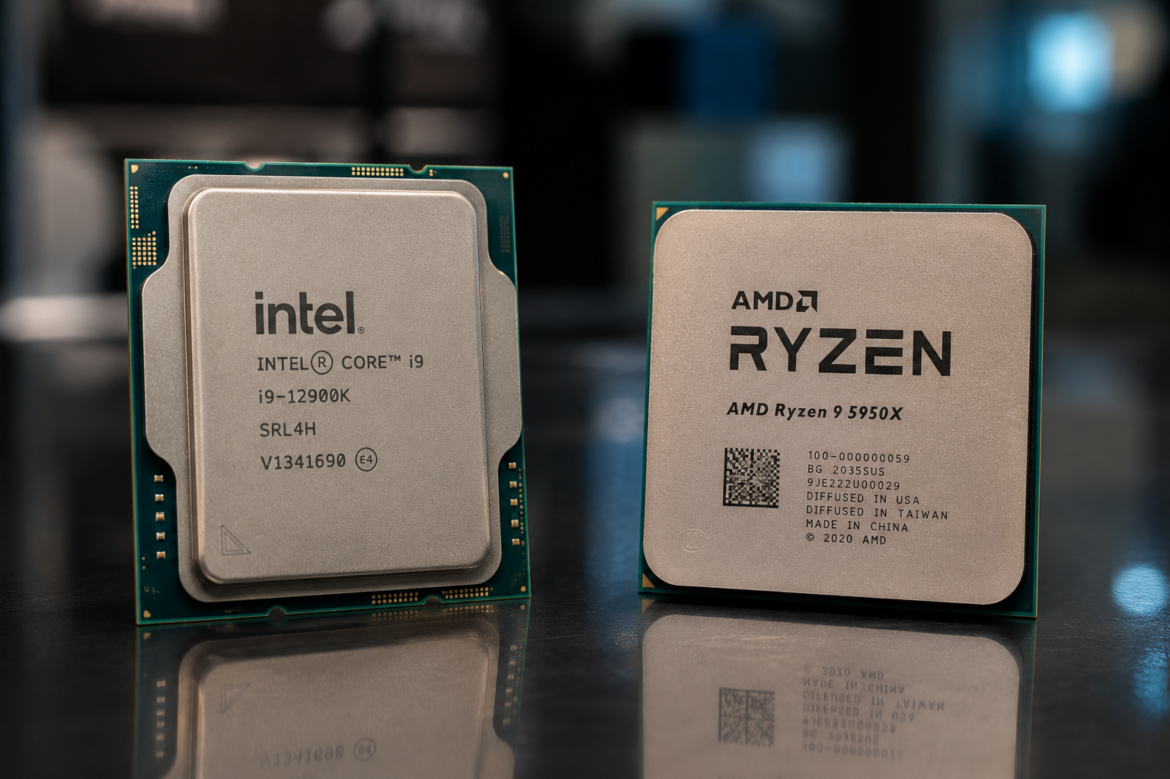
Intel and AMD shares jumped on Monday as falling crude prices and lower Treasury yields improved broader market sentiment, giving another lift to AI-related stocks after last week’s sharp selloff.
Both Intel INTC and AMD stocks were up by 8% on Monday. AMD stock hit its 52-week high of $609.5, and its valuation came closer to the $1 trillion mark.
The moves extended a strong rebound for both chipmakers after investors had initially worried that a slowdown in artificial intelligence development could eventually weaken demand for the processors, accelerators and memory products supporting the industry.
US crude fell about 3% to $96.56 a barrel on Monday, while Brent crude, the international benchmark, declined more than 3% to $100.72.
The decline in energy prices helped ease concerns about inflation and interest rates.
The 10-year US Treasury yield also slipped below the closely watched 5% level, reducing some of the pressure that higher borrowing costs can place on growth-oriented technology stocks.
Higher oil prices can feed into inflation expectations, while elevated bond yields can make future corporate earnings less attractive and increase financing costs.
That combination has weighed particularly heavily on high-growth technology shares in recent market sessions.
Chip stocks rebound after AI fears; fresh signs bolster AI spending
Chip stocks are recovering from last week’s selloff after investors were taken over by concerns that companies could eventually reduce spending on advanced AI systems as calls grew to pace AI development.
Intel has gained more than 19% over the past five trading sessions, while AMD has advanced more than 20%.
Recent developments have also continued to point to substantial spending on AI infrastructure.
OpenAI expects to burn through $278 billion in cash between 2026 and 2030 as it increases spending on computing power and infrastructure, the Financial Times reported on Friday, citing a company presentation seen by the newspaper.
The company expects revenue to increase tenfold over the same period, rising from $36 billion this year to $350 billion in 2030, according to the report.
OpenAI also expects to generate cumulative revenue of $840 billion through the end of the decade.
The spending projections suggest that demand for computing infrastructure could remain substantial even as investors debate whether the current AI boom can sustain its pace.
Anthropic is also considering the rollout of a new AI model to counter OpenAI’s momentum following the launch of GPT-6 Astra, Reuters reported, citing three sources.
The potential release comes as Anthropic prepares for an expected IPO and after CEO Dario Amodei called for a slowdown in the development of increasingly powerful AI systems.
BofA sees semiconductor market reaching $3.2 trillion
The longer-term outlook for semiconductor demand has also remained constructive despite recent volatility.
Bank of America analyst Vivek Arya said last week that the semiconductor industry’s long-term expansion remains strong.
He forecasts the industry’s total addressable market will reach $3.2 trillion by 2030, compared with an estimated $1.7 trillion this year.
Arya said he sees “no signs of slowing” in customer orders, long-term agreements, supply commitments and chip pricing despite the recent turbulence in semiconductor stocks.
Intel was among the stocks Arya identified as potentially benefiting as semiconductor momentum strengthens.
Intel gets fresh Wall Street optimism
Intel received another bullish assessment from Wall Street last week, with Melius Research issuing a Buy rating and setting a $165 price target, implying about 51% upside from Friday’s close.
Melius analyst Ben Reitzes also outlined a path toward $200 for the stock over the next two years, based largely on the potential of Intel Foundry Services and its advanced 14A semiconductor manufacturing node.
The thesis assumes high-volume production can accelerate by 2028, supported by commitments from major customers and industry players including Apple and Tesla.
A stronger foundry business could provide Intel with an additional source of growth as demand for advanced computing increases.
The company’s traditional product businesses could also benefit from higher average selling prices for AI-enabled PCs and rising demand for AI workloads.
Together, those factors could provide multiple avenues for Intel to increase its earnings and valuation if execution improves.
Tigress Financial also raised its Intel price target to $145 from $118 last week while maintaining a Buy rating.
The firm described Intel as being in an “accelerating AI-driven turnaround”.
Tigress pointed to stronger Xeon demand, improving execution on Intel’s 18A process, operating leverage and the company’s Terafab partnership as potential drivers of better manufacturing economics.
Intel has also received support from a potential manufacturing deal.
Reuters reported last week that SK Hynix is discussing an arrangement that could bring memory-chip production to Intel’s long-delayed Ohio manufacturing site.
Such a deal could provide a boost to Intel’s manufacturing business as the company seeks to rebuild its position in the global semiconductor supply chain.
AMD gains confidence from supply and product ramps
AMD’s recent gains have also been supported by improving investor confidence in its product pipeline.
Piper Sandler reiterated an Overweight rating and a $600 price target on AMD following the chipmaker’s third-quarter pre-quiet period call last Tuesday.
Analyst David O’Connor said the overall message from AMD’s investor relations team was reassuring, with CPU and GPU product ramps progressing as planned.
O’Connor also indicated that demand continues to exceed available supply.
Current supply capacity appears sufficient to support AMD’s existing guidance, while leaving room for the company to potentially outperform expectations.
The discussion covered several important components of AMD’s growth strategy, including its Helios server ramp-up, Venice CPUs, Optics scale-up architecture, and high-bandwidth memory supply.
Piper Sandler also reviewed AMD’s margins, client computing and gaming businesses, with the programs described as remaining on track and supply positioned to support the company’s guidance.
The post Why are Intel and AMD stocks surging on Monday? appeared first on Invezz